Family Law — No Windfall: Court limits Inheritance Claim under IPFDO for Child of Deceased
LN v LK [2025] HKFC 117, a judgment by Deputy District Judge J. Lee, reaffirms the principle that financial provision under the Inheritance (Provision for Family and Dependants) Ordinance (Cap. 481) (“IPFDO”) is not a vehicle for posthumous lifestyle enhancement, but a statutory mechanism aimed at ensuring reasonable maintenance for demonstrated needs. This judgment offers valuable guidance on the assessment of reasonable provision for a minor child, born out of wedlock, from a modest estate where the deceased left nothing to the child under his will.
Vivien Leung, instructed by Messrs. Freda Lim & Co, represented the Respondent.
Chris Wong provides his analysis on the judgment below.
Overview
This case concerns an application made by LN, a 15-year-old illegitimate son of the late LC, for reasonable financial provision under the IPFDO. The respondent, LC’s eldest son, LK, was named executor to LC’s estate. LC was married to Madam Chen (the respondent’s mother) until his death in March 2022. LN was the child of LC’s extramarital relationship with a domestic helper. Because of her job nature and immigration status as a foreign domestic helper, she could not reside with or care for LN in Hong Kong, so LN had lived under LC’s care until his death, after which he was placed in a government-run children’s hostel.
Under the last will of LC drawn up on 31 January 2013 (ie. 3 years after LN’s birth), there were no provisions for LN [34]. The net estate, after expenses, was HK$6,006,345.36 [9].
LN’s mother, acting as LN’s next friend, sought a lump sum of HK$6,045,212 [10] or alternatively HK$6,396,260 [11], exceeding the net value of the estate, to fund his needs for private accommodation, domestic helper, international schooling, and the eventual UK medical studies. LK proposed a far more modest maintenance of HK$9,000 until LN reached majority or completed full-time education [13].
Legal Framework and Principles
The court applied sections 3 and 5 of the IPFDO, which confined awards to what is “reasonable maintenance” having regard to the statutory factors, including the applicant’s needs, the estate’s size, and the deceased’s obligations. Drawing on the UK Supreme Court decision Ilott v The Blue Cross [2018] AC 545, the court stressed that “maintenance” imports a provision to meet the everyday living expenses [24]. It is not limited to subsistence but does not extend to all that may be desirable; it must be determined objectively, not by whether the deceased acted reasonably. Testamentary wishes remain relevant and can be overridden only if justified by proven needs [33].
Findings and Analysis
Deceased’s frugality and intentions: The court placed weighty consideration on the lifestyle LN had under LC’s care. The Deceased adopted a frugal lifestyle and there was no evidence to suggest that he was a generous husband or father. The court found that at the time of the Deceased’s death, there was an expectation that LN would continue to receive education at a government school. The court considered that it was not in LN’s best interests to switch to an international school in Hong Kong or to attend boarding school in the UK due to potential adjustment difficulties and uncertainties and stressed the fact that LN could not reside with his mother due to his mother’s job as a domestic helper does not mean that the estate should be responsible for the luxuries that his mother wants for him .
Evidence and Credibility: The judge found the mother to be an unreliable witness, having “crafted her testimony largely with the benefit of hindsight” [32] including assertions about hostel fees and vague allegations about LC’s testamentary intention. Conversely, LK, the executor, was reliable [32]. The judge also accepted the evidence of expert witnesses (social worker and psychologist) who opined the hostel environment was structured and beneficial, with improved academic and social adjustment for LN, hence in the child’s best interest.
Provision of Maintenance: Taking into account evidence elicited during the trial, which revealed that LN’s mother had not been truthful about hostel fees and government allowances, the court assessed the reasonable monthly expenses of LN at HK$7,198, deducting the mother’s $1,000 contribution, amounting to HK$6,198 payable from the estate. The maintenance sums are to be paid into court with periodical payment be paid to LN’s mother, which reflects the court’s concern to safeguard minor’s interest from possible overspending, misuse or dissipation.
Conclusion
This case underscores the importance to avoid disproportionate depletion of modest estates through over-ambitious claims. The judgment illustrates the disciplined approach to IPFDO. Provision is maintenance-based, anchored in the deceased’s lifestyle, prior support, and objective necessity, but not aspirational enhancements. Credibility findings can decisively undermine inflated claims. Also, the court will weigh testamentary wishes alongside needs and estate size, especially for modest estates; while stable existing arrangements will not be displaced without compelling evidence.
Vivien Leung

“Vivien is pragmatic, reasonable and gives sensible advice.” “She has in-depth knowledge on family litigation.” “Vivien is a force to reckon with. She is very steady and works very hard and diligently, especially on relocation and children’s cases.”
Chambers and Partners Greater China Region Guide 2025, Family/Matrimonial — Band Spotlight
Vivien was acknowledged by Chambers and Partners (2025) as a “Band Spotlight” practitioner in Family/Matrimonial Law, and was also recognised by the Legal 500 (Asia-Pacific 2025) as a “Rising Star” in Family and Private Client practice areas.
Vivien advises on all aspects of matrimonial finance and children’s matters and has particular experience in handling divorce cases with a cross-border or international element.
Find out more from Vivien’s profile.
Chris Wong
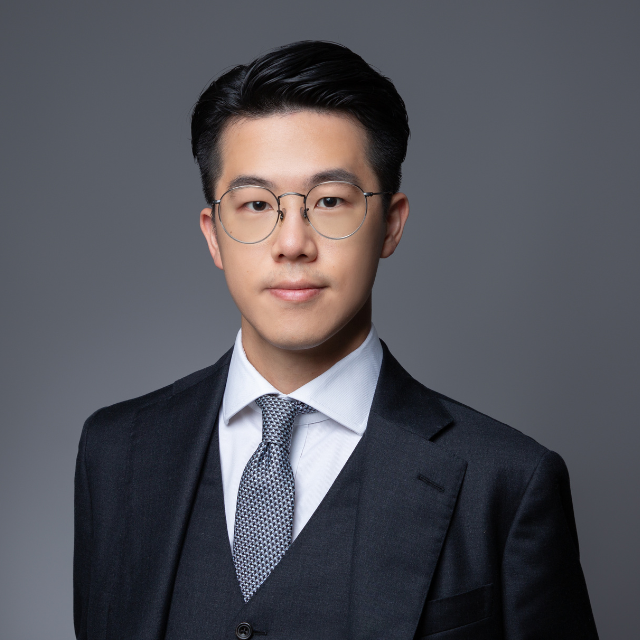
Prior to joining Chambers in 2024, Chris served as a Judicial Assistant at the Hong Kong Court of Final Appeal, where he assisted the judges with substantive appeals, leave applications, and other works of the Court generally. Chris was called to the Bar in 2023, upon his completion of pupillage with Mr. Tony Li SC, Mr. Eric Leung, Mr. Robin D’Souza and Mr. Simon Wong.
During his legal studies, Chris competed in the Willem C. Vis International Commercial Arbitration Moot, where he received honourable mentions both as an oralist and for the written memorandums.
Chris is developing a broad civil and criminal practice. He is fluent in English, Cantonese, and Mandarin. He accepts instructions in all areas of work.
Visit Chris’s profile for more details.
This article was first published on 21 August 2025.
Disclaimer: This article does not constitute legal advice and seeks to set out the general principles of the law. Detailed advice should therefore be sought from a legal professional relating to the individual merits and facts of a particular case. The photographs which appear in this article are included for decorative purposes only and should not be taken as a depiction of any matter to which the case is related. The views and opinions expressed in this article/material are solely those of the members authoring it and do not necessarily reflect the official policy or position of Denis Chang’s Chambers, or of any other member or members of Denis Chang’s Chambers.