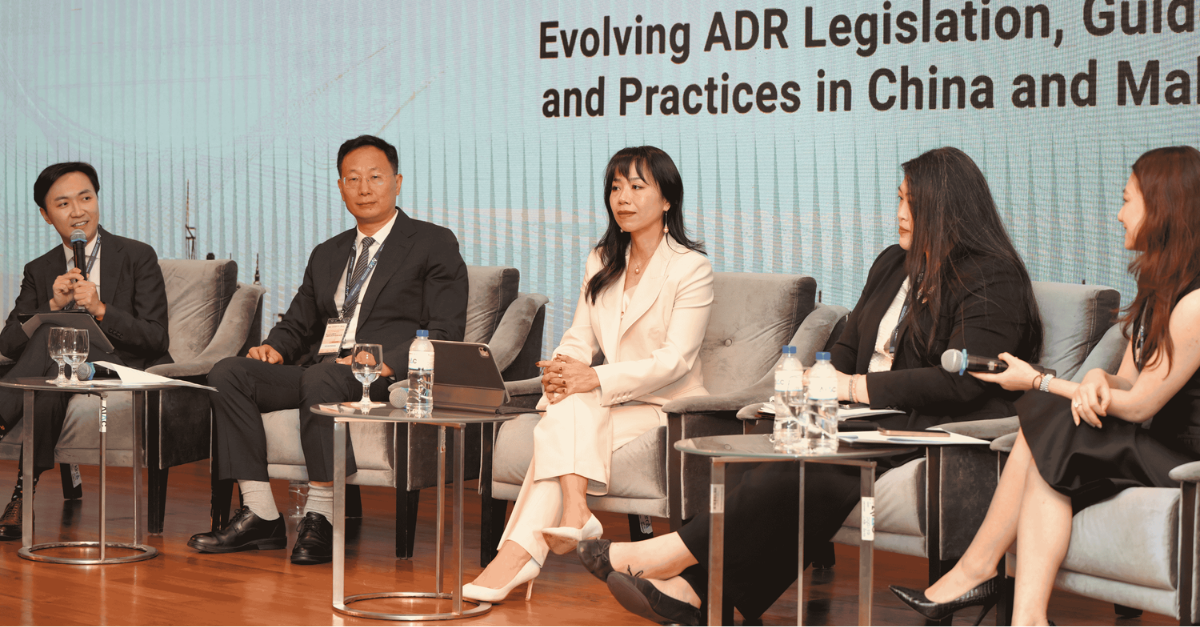
Matthew Suen spoke at China Arbitration Week Kuala Lumpur Seminar
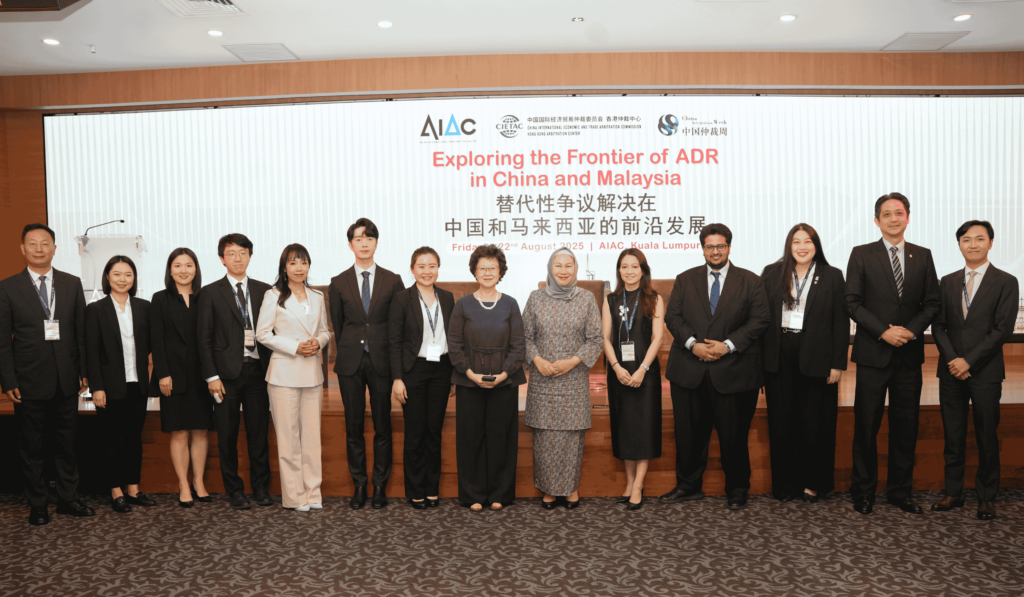
Matthew Suen of Denis Chang’s Chambers was recently invited to speak in a seminar of the 2025 China Arbitration Week in Kuala Lumpur, co-hosted by China International Economic and Trade Arbitration Commission (CIETAC) Hong Kong Arbitration Center and Asian International Arbitration Centre (AIAC).
Matthew spoke in the first panel on the topic “Evolving Landscape of ADR, Guidelines and Practices in China and Malaysia”, with his co-panellists Mr Guowang Xie (from Beijing Jingyue Law Firm), Ms Mariana Zhong (from Hui Zhong Law Firm) and Ms Hui Wen Tan (from Jeff Leong, Poon & Wong). The session was moderated by Ms Crystal Wong Wai Chin (LHAG).
Matthew addressed the role of soft law instruments in ADR and shared his experience on “what works” and “what doesn’t”. In particular, he gave his perspectives on the potential utility of artificial intelligence (AI) in document-heavy arbitrations, includingthe application of AI in the discovery process. Matthew further analysed the significance of the new guidelines on the use of AI in arbitrations published by CIETAC – the (Provisional) Guidelines on the use of Artificial Intelligence in Arbitrations, described as the “first-of-its-kind guidelines in the Asia-Pacific region”.[1] These Guidelines provide crucial assistance to arbitral tribunals navigating this emerging field, offering guidance on how to balance the advantages of AI technologies with the risks of confidentiality breaches.
The Seminar attracted participants from the legal and arbitration communities representing various jurisdictions.
News coverage by China Arbitration Week: https://mp.weixin.qq.com/s/EOKfUDxipBIFbU4bOc20Sw
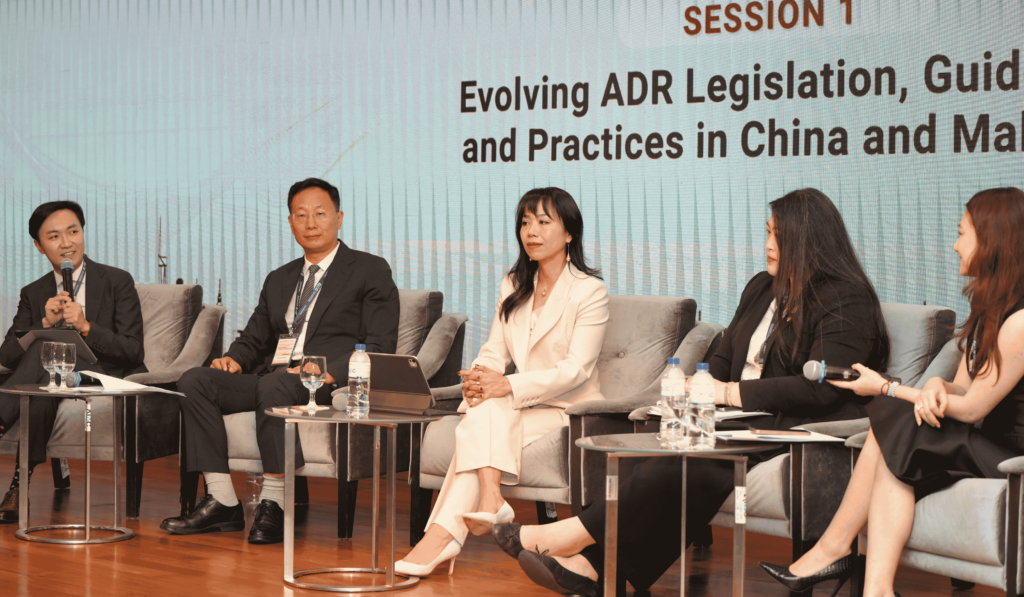
孙晧邦大律师受邀出席中国仲裁周马来西亚吉隆坡研讨会并发言
孙晧邦大律师近日出席了由中国国际经济贸易仲裁委员会(贸仲)、香港仲裁中心与亚洲国际仲裁中心(AIAC)联合在吉隆坡举办的2025年中国仲裁周研讨会。孙大律师在第一个环节的专题讨论中发言,主题为“区域视角:中国和马来西亚争议解决机制变革”。讨论由黄慧晶女士(LHAG律师事务所合伙人)主持,同场嘉宾包括谢国旺先生(贸仲仲裁员、北京市京悦律师事务所合伙人)、钟莉女士(汇仲律师事务所合伙人)及陈慧雯女士(Jeff Leong, Poon & Wong律师事务所合伙人)。
孙大律师探讨了软法工具在替代性争议解决中的应用,重点分析了“有效”与“无效” 的实践,并特别关注人工智能(AI)在文件密集的仲裁中的潜力,尤其是证据开示程序中人工智能技术的运用。他强调贸仲近期发布的《人工智能在仲裁中应用的暂行指引》的重要意义——该指引被誉为“亚太地区首创的AI仲裁规范”[1],为仲裁庭在这一新兴领域的探索提供了方向,特别就如何平衡人工智能技术优势与保密性风险提出了具体指导。
本次研讨会汇聚了来自多个司法管辖区的法律及仲裁界人士参与。
中国仲裁周新闻报道:https://mp.weixin.qq.com/s/EOKfUDxipBIFbU4bOc20Sw
Matthew Suen
-1.png)
Matthew is a Charles Ching Scholar. Matthew is developing a broad civil practice across the full range of commercial litigation, international arbitration and advisory work. He is comfortable being instructed as part of a counsel team or in his own right, and has appeared unled in the High Court.
Before coming to the Bar, Matthew had a stint at one of China’s top Red Circle Firms where he acquired a good understanding of the mainland Chinese market in the context of cross-border commercial disputes. As barrister, Matthew is regularly instructed to act – as junior or sole counsel – in high-stakes commercial arbitrations administered by major arbitral institutions in Asia, including HKIAC, SIAC and CIETAC (HK). He also acts as secretary to arbitral tribunals.
Matthew read law in Hong Kong and mainland China and holds a Master of Laws degree in PRC Civil and Commercial Law from Peking University. He served pupillage with Mr Hectar Pun SC, Mr Adrian Lai JP, Dr Benny Lo, Mr Randy Shek and Mr Richard Yip before commencing his full practice in 2022. He currently serves in the Standing Committee on Mainland Affairs and the Committee on Arbitration of HKBA.
Please see Matthew’s profile for more details.
This article was first published on 2 September 2025.
Disclaimer: This article does not constitute legal advice and seeks to set out the general principles of the law. Detailed advice should therefore be sought from a legal professional relating to the individual merits and facts of a particular case. The photographs which appear in this article are included for decorative purposes only and should not be taken as a depiction of any matter to which the case is related. The views and opinions expressed in this article/material are solely those of the members authoring it and do not necessarily reflect the official policy or position of Denis Chang’s Chambers, or of any other member or members of Denis Chang’s Chambers.