Probate – Court of Appeal allows appeal against summary judgment in probate action and clarifies applicable principles
Probate
In Chiu Mei Cherry v Yip Ngan Yuk & Anor [2025] HKCA 677, the Court of Appeal (“CA”) allowed the Defendants’ appeal against the summary judgment entered in favour of the Plaintiff pronouncing for the force and validity of the alleged last will and testament of the deceased (“Deceased”). Chan Chi Hung SC, leading Andrew Lau, instructed by Messrs. Ivan Tang & Co, represented the successful Defendants.
Background
The Deceased and the 1st Defendant married in January 1981. The 2nd Defendant is their only son, born in December 1981.
In or around 2019, the Deceased began an extra-marital relationship with the Plaintiff, who subsequently gave birth to a son in November 2021 (“Younger Son”).
In around February 2022, the Deceased was diagnosed with pancreatic cancer.
During his lifetime, the Deceased made the following wills:-
(1) A will dated 6 October 2021 (“October 2021 Will”), in which the Deceased, inter alia, (i) named the Defendants as executors; (ii) bequeathed his properties and residuary estate to the Defendants;
(2) A will dated 15 June 2022 (“June 2022 Will”), in which the Deceased, inter alia, (i) named the 2nd Defendant as executor; and (ii) bequeathed his properties to the Defendants, save for one to be left to the Younger Son;
(3) A will dated 26 July 2022 (“July 2022 Will”), in which the Deceased, inter alia, (i) named the Plaintiff as executor; and (ii) bequeathed all his properties (including his share in the matrimonial home) to the Plaintiff.
The July 2022 Will was executed by the Deceased in the presence of a solicitor (“Solicitor”) and his clerk. Immediately prior to the execution of the July 2022 Will, the Deceased had also been examined by a psychiatrist (“Psychiatrist”), who issued a medical certificate and a psychiatric report stating that the Deceased had a sound mind and understanding ability, and was mentally fit to make a valid will.
The Deceased passed away on 8 September 2022. By the time of his death, the Deceased and the 1st Defendant had been married for some 41 years.
On 31 July 2023, the Plaintiff commenced the present probate action to propound for the force and validity of the July 2022 Will.
The Defendants challenge the July 2022 Will on, inter alia, the following grounds:-
(1) Lack of testamentary capacity on the part of the Deceased;
(2) Want of knowledge and approval by the Deceased of the July 2022 Will;
(3) Undue influence by the Plaintiff;
(4) The July 2022 Will did not express the true intentions of the Deceased as regards the distribution of his assets, properties or estate.
Proceedings Below
By a written decision dated 14 October 2024 (“Decision”), H Au-Yeung J (“Judge”) gave summary judgment in favour of the Plaintiff, pronouncing for the force and validity of the July 2022 Will. The Judge rejected all of the Defendants’ contentions, and found that (i) the Plaintiff had established all the constituent elements of her cause of action; and (ii) the Defendants had failed to show any issue in dispute that ought to be tried, or that for some other reason there ought to be a trial.
The Appeal
The appeal was heard before Cheung, G Lam and Chow JJA on 18 June 2025.
Applicable Principles
Chow JA (giving the CA Judgment) clarified the applicable principles regarding summary judgment in a probate action to propound a will in solemn form:-
(1) It is not in dispute that summary judgment may be given in a probate action to propound a will in solemn form. However, it has been emphasised that such an application must be approached with caution or care, in view of the special nature and features of a probate action, the role of the court in such an action, and the effect of an order of the court pronouncing for the force and validity of a will in solemn form [18];
(2) The special nature and feature of a probate action include: (i) a probate action is an action in rem; (ii) the court’s function in a probate action is inquisitorial (and thus the court will, at the trial, endeavour to make a positive finding as to which is the valid will, or whether the deceased died intestate, and, in the case of an interest action, who is entitled to representation, and generally will not, except in the case of a revocation action, merely dismiss the action without more); (iii) a defendant is entitled to insist upon a will being proved in solemn form of law and attend the trial to cross-examine the attesting witnesses, and will not be ordered to pay costs unless the court is of the opinion that there was no reasonable ground for opposing the will; and (iv) a will proved in solemn form is, subject to two recognised exceptions (namely, discovery of a later will, and judgment obtained by fraud), generally irrevocable. For these reasons, it would only rarely be appropriate, or seldom be likely, for summary judgment to be given in a contentious probate action [20];
(3) There is a need for caution before giving summary judgment in a probate action [21].
(4) Such caution operates in addition to the general principle that summary judgment is reserved for clear cases only. In particular, summary judgment would not be appropriate in cases involving serious factual disputes. Further, the court, on the hearing of an application for summary judgment, may refuse to give judgment for the plaintiff where the defendant satisfies the court that there ought “for some other reason” to be a trial of the plaintiff’s claim or part of a claim under Order 14 rule 3(1) of the Rules of the High Court (Cap. 4A) [22].
Discussion
A number of special features in the present case led to the conclusion that the Defendants ought to be given a full opportunity to challenge and cross-examine the evidence of various witnesses (including the Solicitor and the Psychiatrist) relied upon by the Plaintiff to prove the validity of the July 2022 Will in a trial. The CA found, inter alia, that:-
(1) The July 2022 Will was executed by the Deceased barely a month after he had executed the June 2022 Will, and involved a fundamental change of the disposition of his estate. Under the June 2022 Will, save and except that one of the properties, the Deceased gave the whole of his remaining estate to the Defendants and nothing to the Plaintiff. However, under the July 2022 Will, the Deceased gave effectively the whole of his estate to the Plaintiff, disinheriting not only the Defendants but also the Younger Son ([24];
(2) The complete disinheritance of the Defendants is something which the Defendants should be allowed a full and proper opportunity to challenge in a trial, particularly when the allegation that they failed to look after the Deceased or refused to pay his medical/living expenses is seriously disputed by them [25];
(3) The solicitor who was responsible for preparing the October 2021 Will and June 2022 Will for the Deceased apparently refused to prepare a new will for the Deceased because (i) the request was made shortly after the execution of the June 2022 Will; and (ii) the contents of the proposed will represented a radical departure from the previous two wills [26-27];
(4) The circumstances in which the Solicitor came to be instructed by the Deceased to make the July 2022 Will are far from clear. Apparently, the Solicitor was first told by the Plaintiff’s present solicitor on or around 20 July 2022 that the Deceased wished to engage a solicitor to prepare a will, and he went with the Plaintiff’s present solicitor to meet the Deceased on 22 July 2022 Will. There is no evidence that either the Solicitor of the Plaintiff’s present solicitor had previously acted for the Deceased. The circumstances in which the Plaintiff’s present solicitor came into the picture have not been explained. On the other hand, according to the Solicitor, his firm is in association with the firm of the Plaintiff’s present solicitor. In these circumstances, whether the Plaintiff was instrumental in the engagement of the Solicitor to prepare the July 2022 Will, and whether the second rule in Barry v Butlin has any application in the present case, ought to be determined in a trial instead of summarily [28];
(5) There were, or might be, errors in the Psychiatrist’s assessment of the Deceased’s testamentary capacity using the “Montreal cognitive assessment Hong Kong version”. For example, the Deceased was required to complete a chain of numbered circles from 1 to 10. It is clear that the Deceased did not complete the chain, but he was nevertheless awarded one point for carrying out the task. Also, the Deceased failed to correctly follow the instructions to draw a cube and a clock face, but he was nevertheless awarded one point and three points respectively for carrying out those tasks. The Judge dismissed these criticisms on the basis that the Defendants and their counsel were not medical experts and they did not have the relevant marking scheme for the assessment, but the CA held that the errors or possible errors were apparent on the face of the assessment sheet, and were matters which it would not be improper for the Defendants to raise with the Psychiatrist for an explanation [29];
(6) There are also other matters of concern which would show the sort of pressure that the Deceased was being subjected to at that time, including the Plaintiff’s erratic behaviour in throwing the Deceased’s items to the hallway outside the Plaintiff’s flat in which the Deceased was then living [30].
On the basis of the above matters, and taking into account the Deceased’s age and health conditions at the time of the making of the July 2022 Will as well as its serious impact on the Defendants, there are issues or questions in dispute which ought to be tried, and/or there ought to be some other reason to be a trial of the Plaintiff’s action [30].
Giving of summary judgment by the Judge involved an exercise of discretion, and the CA would not lightly interfere with a decision of this nature by a judge at first instance. However, the CA is persuaded that this is an exceptional case which justifies their interference with the Judge’s decision on the ground that he has, effectively, engaged in a mini-trial on affidavit evidence, failed to pay sufficient regard to the court’s inquisitorial function in a contentious probate action, and failed to pay sufficient heed to the principle that extra caution is required before exercising the jurisdiction to give summary judgment in a probate action. The present case is not one of those rare cases where it would be appropriate for the probate action to be disposed of summarily [30].
Conclusion
The Defendants’ appeal is allowed, the Decision is set aside, and the Defendants are granted unconditional leave to defend the Plaintiff’s action [31].
Chan Chi Hung SC
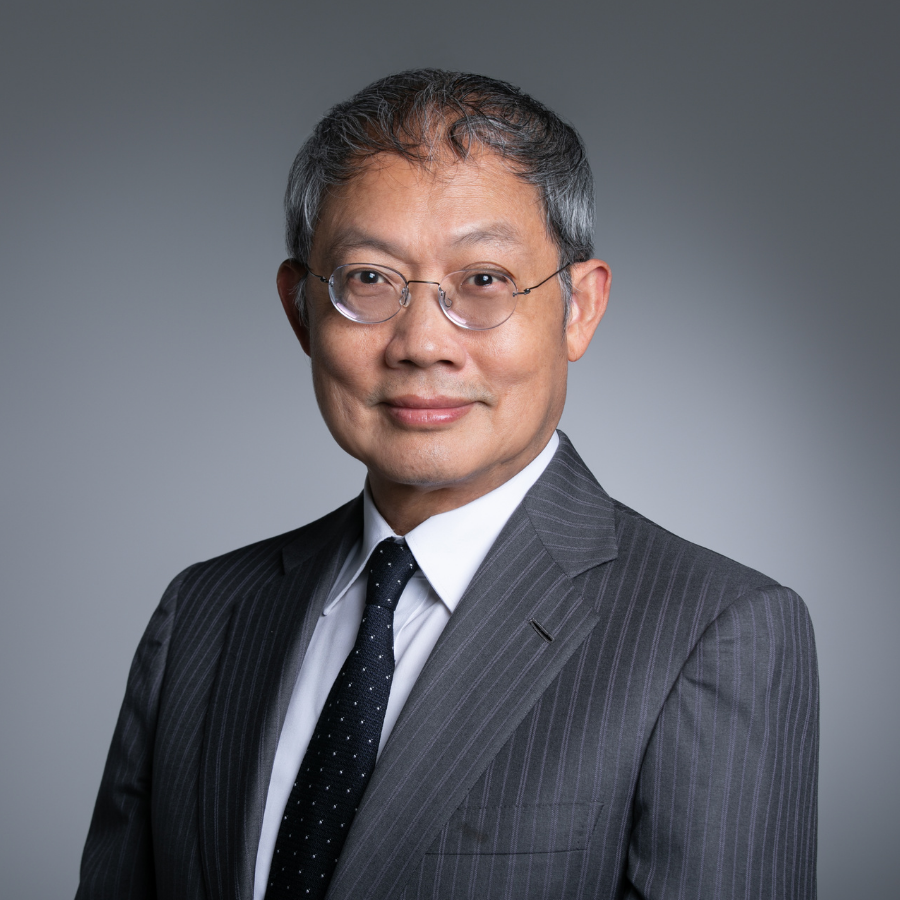
Chi Hung was appointed Senior Counsel in 2005 and has over three decades of civil litigation experience in trust, probate, lands, companies, and commercial disputes.
Visit Chan Chi Hung SC’s profile for more details.
Andrew Lau
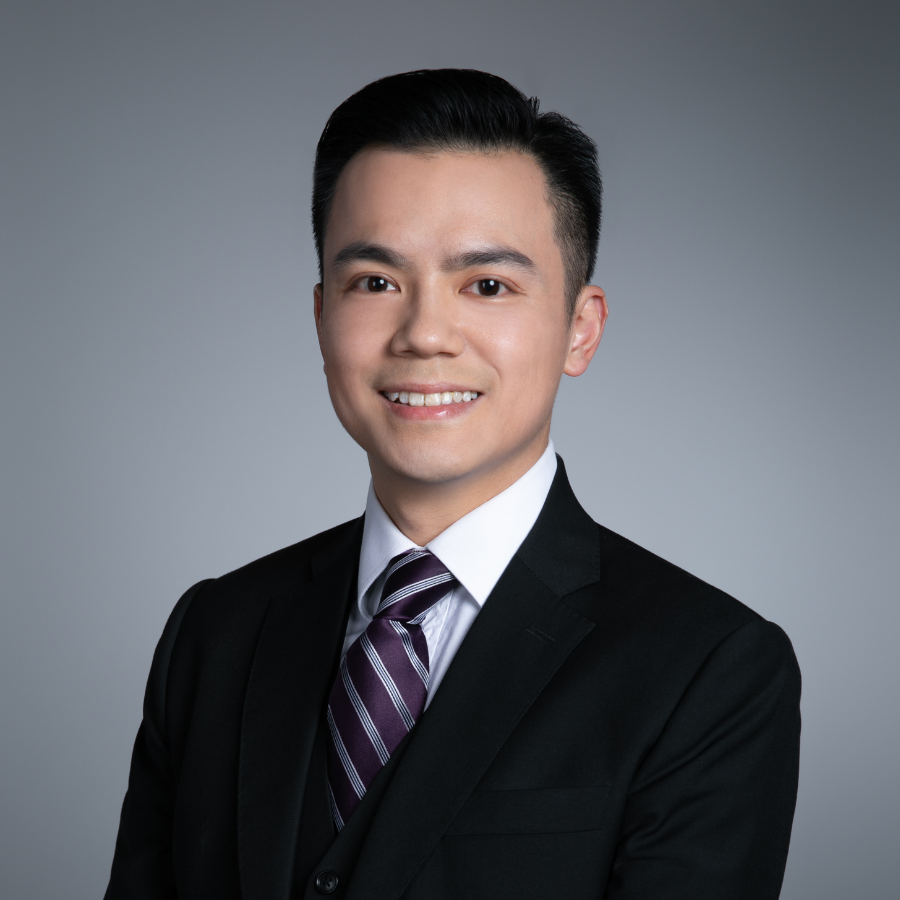
“Andrew is a very competent barrister. He not only has great legal analytical skills, but also a very good sense of the forensic/factual side of litigation, which is important for any type of litigation.”
Legal 500 Asia-Pacific 2025: Administrative and Public Law – Leading Junior
Andrew is a Charles Ching Scholar and a Patrick Yu Scholar. He has a broad civil and criminal practice. He is also a “Rising Star” for Regulatory, Investigations and Crime in Legal 500 Asia-Pacific 2025.
Visit Andrew’s profile for more details.
This article was first published on 13 August 2025.
Disclaimer: This article does not constitute legal advice and seeks to set out the general principles of the law. Detailed advice should therefore be sought from a legal professional relating to the individual merits and facts of a particular case. The photographs which appear in this article are included for decorative purposes only and should not be taken as a depiction of any matter to which the case is related. The views and opinions expressed in this article/material are solely those of the members authoring it and do not necessarily reflect the official policy or position of Denis Chang’s Chambers, or of any other member or members of Denis Chang’s Chambers.